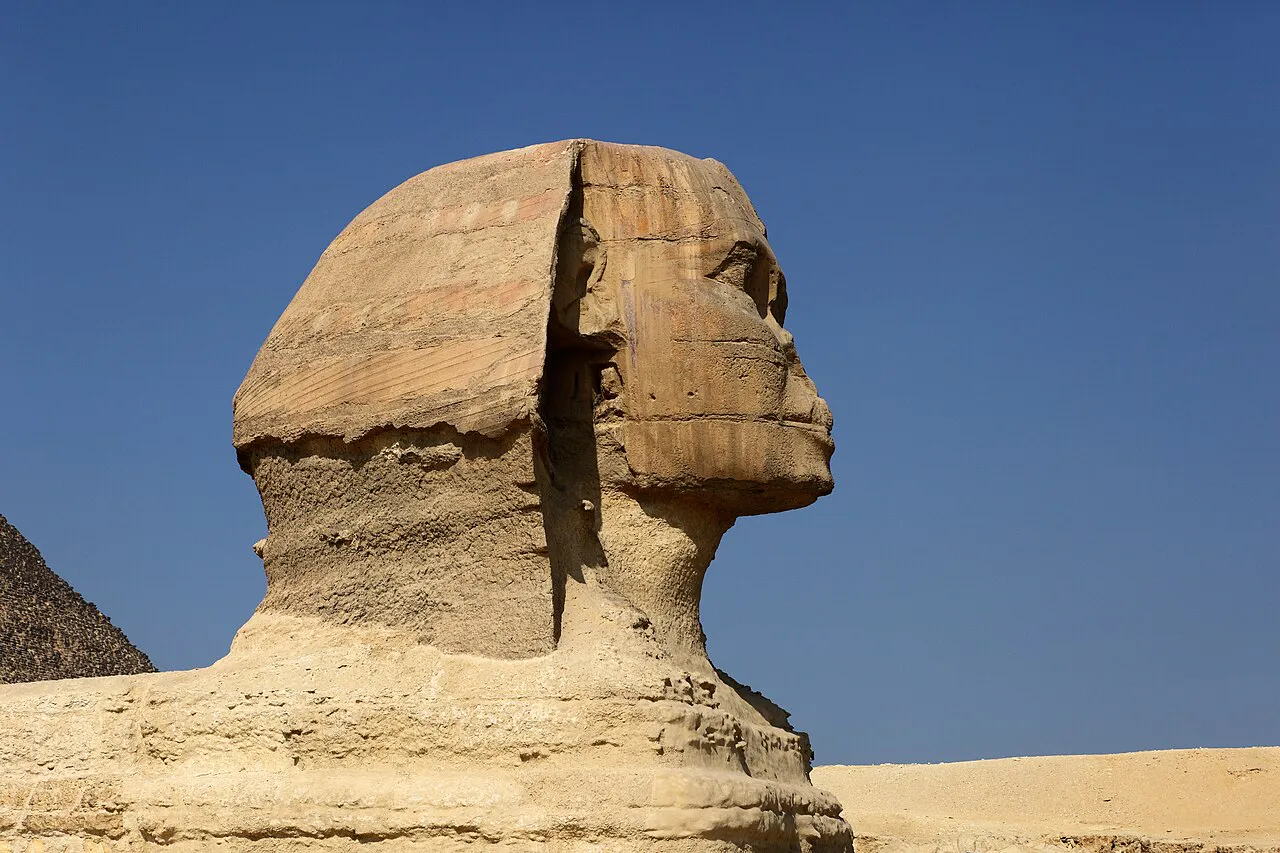
Great Sphinx of Giza
Great Sphinx of Giza
Last updated 2026-10-30
By Global Travel Guide Editorial Team
Introduction
The Sphinx is usually associated with the pharaoh Khafre, whose pyramid stands behind it. It was buried in sand for much of its history and has been restored several times; the nose is missing. Access to the Sphinx enclosure is included in the Giza plateau ticket, but you cannot walk right up to the statue. The site is exposed; go at opening, bring water and ignore touts. Metro to Giza plus a taxi is the usual approach.
Ticket Price
No separate Sphinx ticket; access is included in the Giza plateau ticket (foreign adult EGP 700, student EGP 350).
Opening Hours
Daily 8:00-17:00; the Sphinx enclosure closes about 30 minutes before the plateau.
Transportation
Metro line 2 to Giza, then a taxi or Uber to the plateau (30-45 minutes from downtown Cairo).
Best Season
In Egypt, the best time to visit Great Sphinx of Giza is Nov-Mar; May-Sep is extremely hot.
Pro Tip: See the Sphinx from the plateau
Local Tips You'd Only Learn After Visiting
The details official guides skip — save time, avoid crowds, and get better photos.
1
See the Sphinx from the plateau The Sphinx is viewed from a designated area, not by climbing the monument. Go early for softer light and fewer people, and combine it with the nearby pyramids.
Member-Only Tips
Upgrade to unlock insider hacks, best photo spots, and crowd timing advice.
Frequently Asked Questions3 questions
No. There is no public access inside the Sphinx; visitors view it from the plateau and the enclosure path. The nearby pyramids have separate interior tickets.
Early morning, when the sun lights the front and tour buses have not arrived; late afternoon gives warm side light. Midday is harsh and crowded.
The three main pyramids, the Valley Temple and the panorama viewpoint; the Grand Egyptian Museum is a short drive from the plateau. Allow half a day.