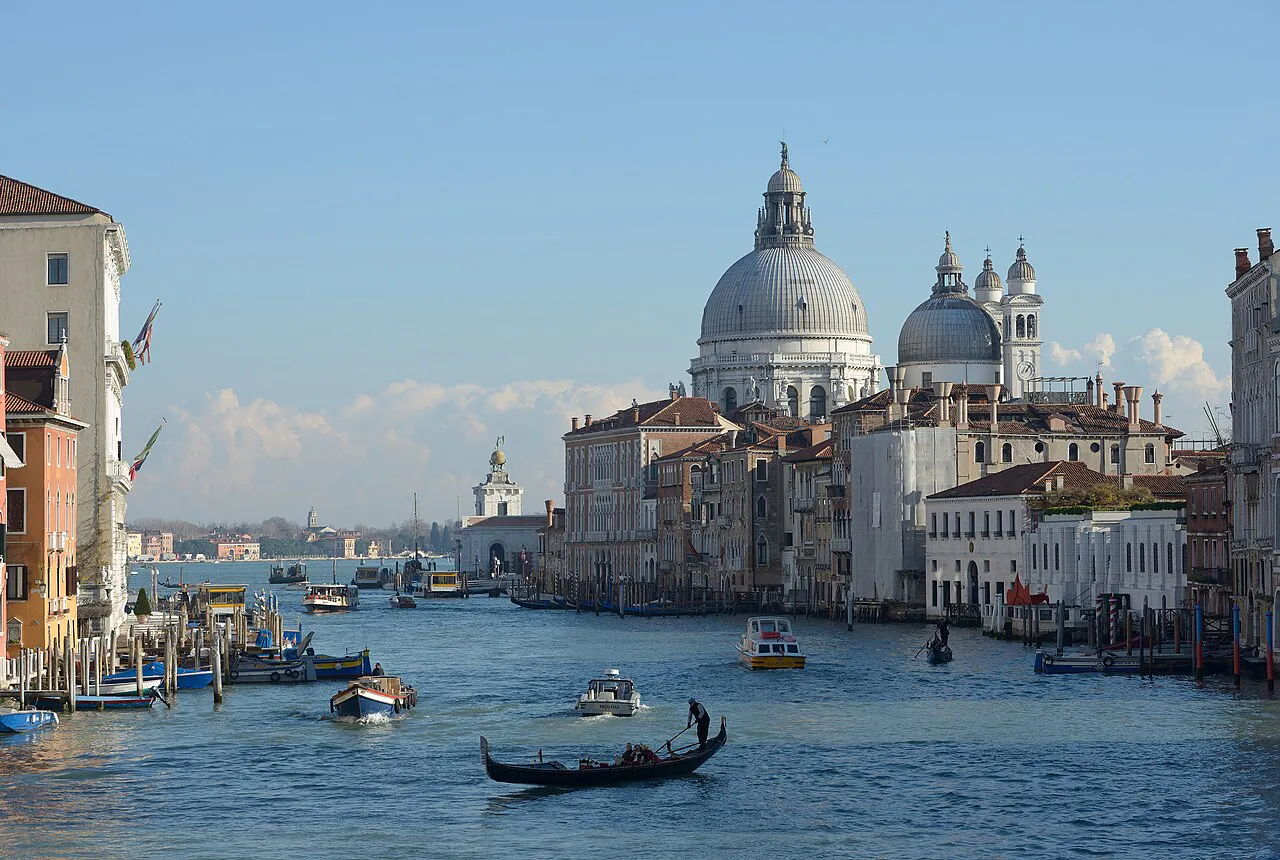
Grand Canal
Grand Canal · Grand Canal, Venice, Italy (runs from Ferrovia/Santa Lucia Station to St. Mark's Basin)
Last updated 2026-10-29
By Global Travel Guide Editorial Team
Introduction
The canal is 30-90 metres wide and averages 5 metres deep, and it has served as the city's thoroughfare since Venice was founded in the 5th century. Its facades cover Venetian Gothic, Renaissance, Baroque, and Neoclassical styles, with Ca' d'Oro, Ca' Rezzonico, Palazzo Barbarigo, and Palazzo Grassi among the landmarks. Only four bridges cross it: Rialto, Accademia, Scalzi, and Constitution. A single vaporetto ticket costs EUR 9.50 for 75 minutes, a 24-hour card is EUR 25, and the official gondola rate is EUR 90 for 30 minutes by day for up to five people. The traghetto ferries offer a cheap two-euro crossing. Line 1 starts at Ferrovia beside Santa Lucia station and runs the full length.
Ticket Price
ACTV vaporetto single EUR 9.50 (75 minutes), 24-hour card EUR 25, 48-hour EUR 35, 72-hour EUR 45. Official gondola rate EUR 90 for 30 minutes during the day and EUR 110 after 19:00, per boat for up to 5 people. Traghetto crossing EUR 2.
Opening Hours
Check the official site before visiting. Vaporetto Line 1 runs approximately 5:00 AM - 11:30 PM daily (every 12-20 min). Night service: Line N runs midnight - 4:30 AM. Gondola service: typically 9:00 AM - 11:00 PM (varies by gondolier association). Rialto Bridge: always open to pedestrians. Palace museums: generally 10:00 AM - 6:00 PM (varies by site).
Transportation
The Grand Canal IS the transportation artery of Venice. From Santa Lucia train station: walk 2 minutes to the Ferrovia vaporetto stop - Line 1 runs the full length of the canal. From Marco Polo Airport: take the ATVO/ACT bus to Piazzale Roma, then vaporetto Line 1 or 2. From Tronchetto parking garage: take the People Mover to Piazzale Roma then vaporetto. The best way to see the canal is by vaporetto Line 1 (slow, full route) or a traghetto crossing (cheap, short).
Best Season
April-June and September-October offer mild temperatures (15-24C), fewer crowds, and lower acqua alta (high water) risk. July-August is peak season with temperatures around 28-32C, heavy crowds, and occasional smell from the canals on hot days. Winter (December-February) is the quietest and cheapest, but acqua alta is most frequent from November through January and temperatures hover around 3-10C.
Pro Tip: Use vaporetto Line 1
Local Tips You'd Only Learn After Visiting
The details official guides skip — save time, avoid crowds, and get better photos.
1
Use vaporetto Line 1 Line 1 runs the full canal and is the most useful public route. Validate your ticket before boarding and keep luggage clear of the aisles.
Member-Only Tips
Upgrade to unlock insider hacks, best photo spots, and crowd timing advice.
Frequently Asked Questions3 questions
The historic city is built on a lagoon with narrow alleys and canals instead of roads, so everything moves by boat or on foot. Cars stop at Piazzale Roma and the mainland.
A gondola is the tourist ride with a fixed rate and a route through the canals; a traghetto is a public gondola ferry that crosses the Grand Canal at fixed points, standing, for a few euros.
Acqua alta is most common in autumn and winter, when high tide and rain coincide; the MOSE barriers now block the highest tides. Check the tide forecast on rainy days.