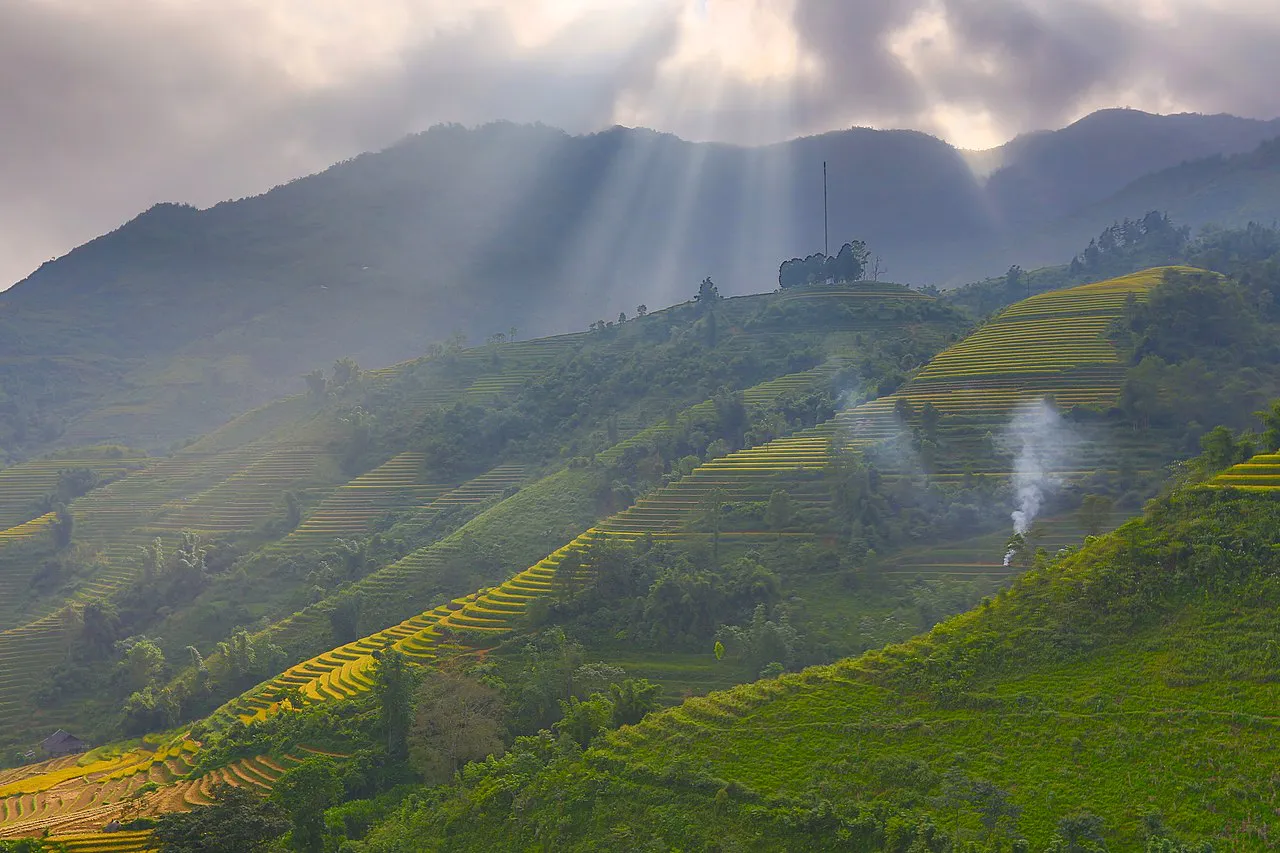
Sapa Terraced Fields
Sapa Terraced Fields
Last updated 2026-10-30
By Global Travel Guide Editorial Team
Introduction
The terraces are planted with rice in the rainy months and turn gold before harvest; the exact timing varies by year and altitude. Popular walks go to Cat Cat, Lao Chai and Ta Van; longer treks need a local guide. Homestays in Ta Van and Giang Ta Chai are a way to stay in the valley rather than the town. Overnight trains from Hanoi reach Lao Cai, about an hour from Sapa, and sleeper buses take five to six hours. Bring layers; the town is much cooler than Hanoi.
Ticket Price
Free to visit the terraced fields and trek on public paths; guided treks, homestays and some village entry fees charge separately.
Opening Hours
Open year-round; the terraces and public paths are accessible 24 hours.
Transportation
Sleeper bus from Hanoi takes 5-6 hours; or overnight train to Lao Cai, then a 1-hour shuttle up to Sapa.
Best Season
In Viet Nam, plan Sapa Terraced Fields for May-Sep; Jul-Aug is peak and Dec-Feb is cold.
Pro Tip: Trek with a local guide
Local Tips You'd Only Learn After Visiting
The details official guides skip — save time, avoid crowds, and get better photos.
1
Trek with a local guide The terraces are best seen on foot with a guide who knows the village paths. Choose a route that matches your fitness and avoid walking through private fields.
Member-Only Tips
Upgrade to unlock insider hacks, best photo spots, and crowd timing advice.
Frequently Asked Questions3 questions
September-November for golden rice terraces and clear skies; March-May for flowers and green fields. December-February is cold, misty and sometimes icy.
Half-day walks to Cat Cat or Ta Van suit most visitors; longer treks to Lao Chai and Giang Ta Chai add homestays. Hire a local Hmong guide and check the weather.
The Hmong are one of the main ethnic groups in the Sapa area, known for indigo-dyed clothing, silver jewellery and terraced farming. Respect local customs and ask before photographing people.