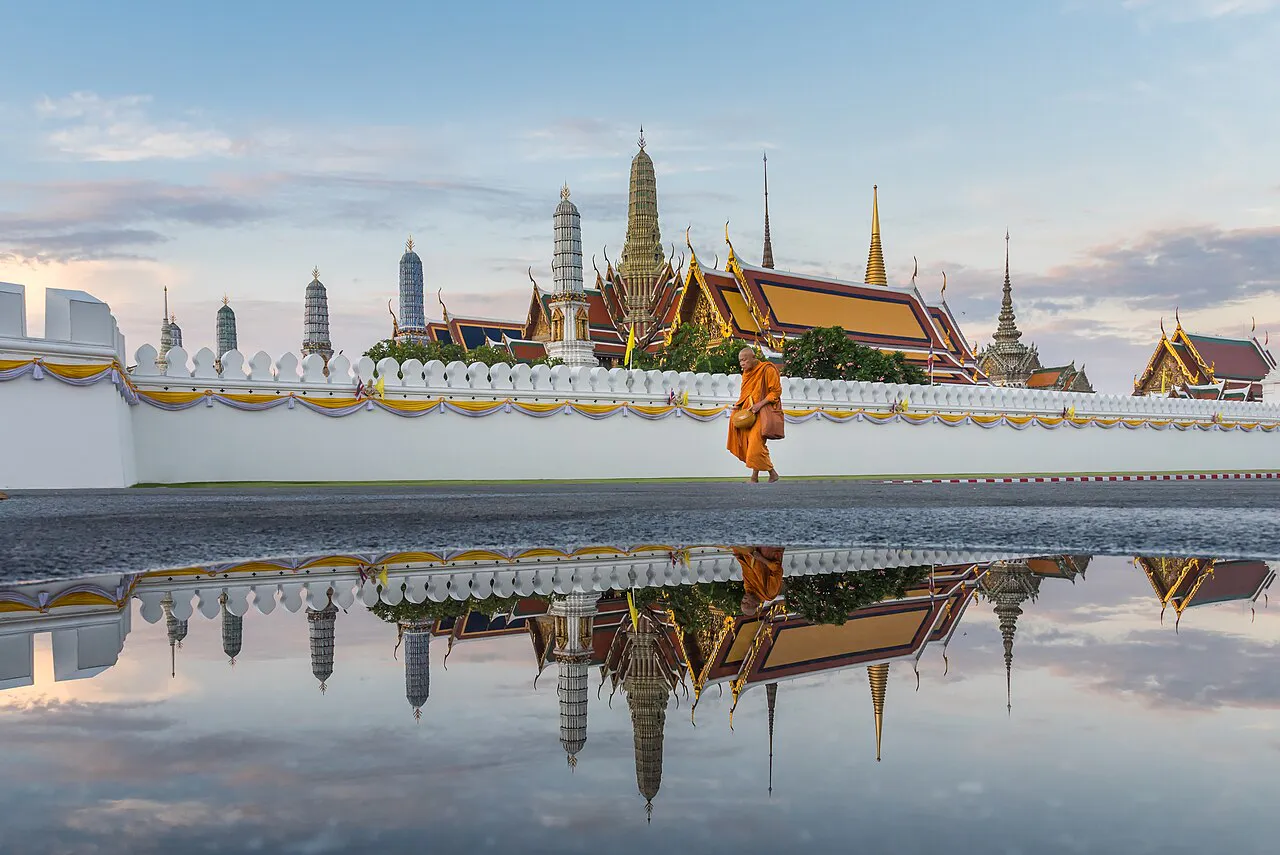
Grand Palace
Grand Palace · Na Phra Lan Rd, Phra Nakhon, Bangkok 10200, Thailand
Last updated 2026-10-29
By Global Travel Guide Editorial Team
Introduction
King Rama I founded the Chakri Dynasty and made the palace his official residence in 1782, and it stayed in royal use until the mid-20th century. The architecture mixes Thai craft with European influence: Chakri Maha Prasat throne hall sets a Thai roof on a Renaissance-style building. Wat Phra Kaew holds the 66-centimetre Emerald Buddha carved from a single block of jade, which the King changes into one of three seasonal robes each year. The 500 baht ticket covers the palace, the temple, and the Queen Sirikit Textile Museum, and children under 120 cm enter free. It opens daily 8:30-15:30, with grounds closing at 16:30, and shuts only for special royal ceremonies. The MRT to Sanam Chai is the most convenient approach.
Ticket Price
500 baht adult (includes Grand Palace + Wat Phra Kaew + Queen Sirikit Textile Museum); children under 120cm free; Audio guide: 200 baht. Check the official site before booking.
Opening Hours
Daily 8:30–15:30 (ticket sales end 15:30; grounds close 16:30); The Emerald Buddha temple has specific visiting hours within that period. Closed only on special royal ceremonies. Check the official site before visiting.
Transportation
BTS Skytrain to Saphan Taksin + Chao Phraya Express Boat to Tha Chang pier (most scenic); MRT Subway to Sanam Chai (newest, most convenient); Bus 1, 2, 3, 12, 25, 44, 47, 82, 91, 503; Tuk-tuk from Khao San ~50-100 baht
Best Season
November–February (cool, dry season) for most comfortable weather; March–May is hot (35°C+); June–October is rainy season with short heavy showers; all year is popular so crowds never fully disappear
Pro Tip: Dress for the dress code
Local Tips You'd Only Learn After Visiting
The details official guides skip — save time, avoid crowds, and get better photos.
1
Dress for the dress code Cover shoulders and knees, and avoid ripped clothing. The palace enforces the rules at the entrance; bring a light layer if you are unsure.
Member-Only Tips
Upgrade to unlock insider hacks, best photo spots, and crowd timing advice.
Frequently Asked Questions3 questions
The Emerald Buddha is a small jade statue in Wat Phra Kaew, the temple inside the Grand Palace. It is the most sacred Buddha image in Thailand, and its robes are changed by the king seasonally.
Shoulders and knees must be covered; no sleeveless tops, shorts, leggings worn alone, ripped jeans or see-through fabrics. Sarongs can be rented at the entrance.
It is the throne hall in the Grand Palace, with a Thai roof over a European-style facade. It is still used for royal ceremonies and is one of the complex's landmarks.