Salzburg Old Town
Salzburg Old Town
Last updated 2026-10-29
By Global Travel Guide Editorial Team
Introduction
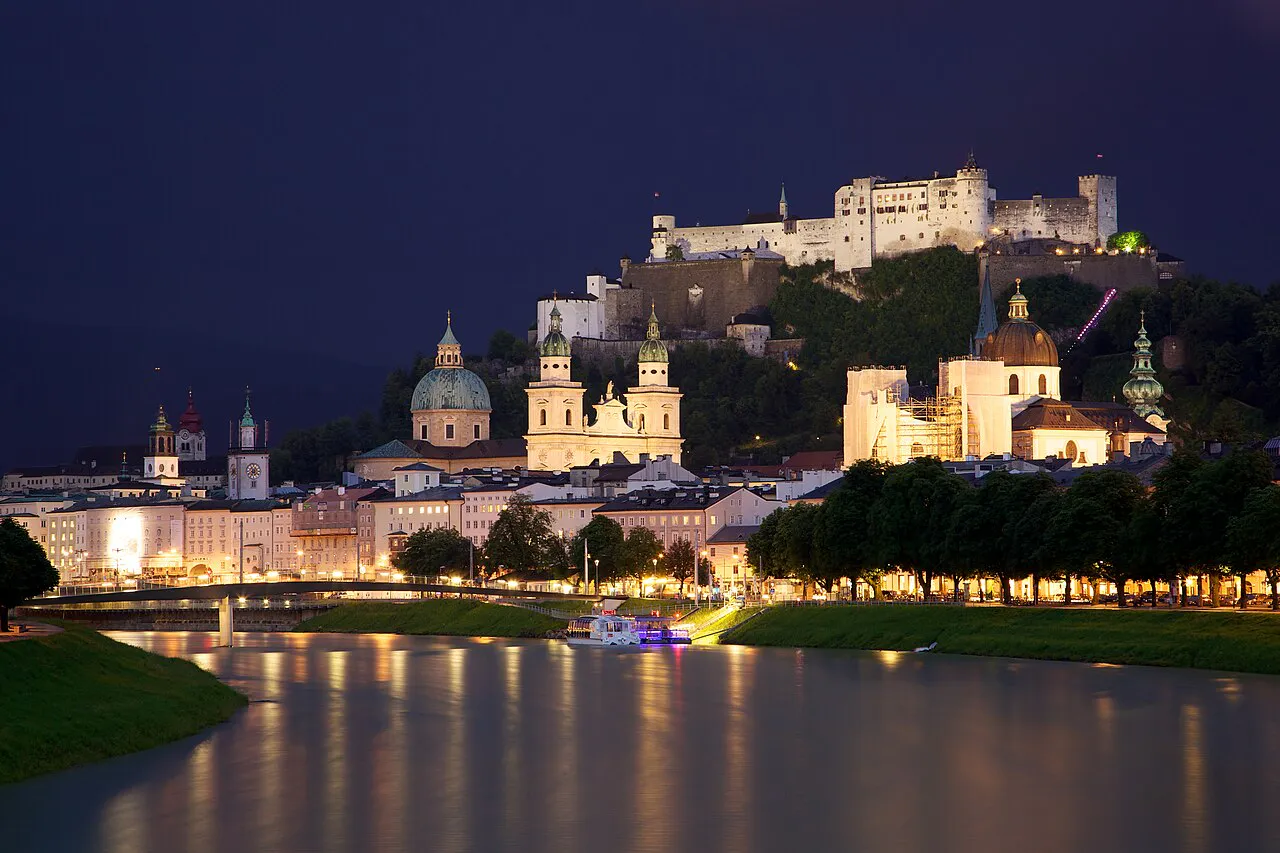
The city began as the Roman settlement of Juvavum around 15 BC and later spent more than a thousand years as an independent prince-archbishopric. Its compact centre holds Salzburg Cathedral, a 17th-century Baroque church with two copper domes; the Getreidegasse, a narrow medieval lane known for wrought-iron guild signs; Mozart's birthplace at Getreidegasse 9, where he was born in 1756; Mirabell Palace and Gardens, laid out in 1606; and the Hohensalzburg Fortress, a preserved medieval castle reached by funicular. Most sights sit within a 15-minute walk. Walking the streets is free, while the birthplace, cathedral and fortress charge separate admission. The streets stay public around the clock, though museums and churches keep their own hours. Salzburg Hauptbahnhof is a 10-15 minute walk or a short trolleybus ride away; summer afternoons are busy, and early morning is calmest.
Ticket Price
Free to walk around the old town; Mozart's Birthplace, the Dom and the fortress charge separate admission.
Opening Hours
The streets and squares are public and open 24 hours. Museums and churches set their own opening hours; check the official site before visiting.
Transportation
Salzburg Hauptbahnhof is a 10-15 minute walk or a short trolleybus ride to the old town; the airport is 20 minutes by bus.
Best Season
In Austria, visit Salzburg Old Town in Jun-Sep; winter (Dec-Apr) is for snow sports.
Pro Tip: Walk the Getreidegasse early
Local Tips You'd Only Learn After Visiting
The details official guides skip — save time, avoid crowds, and get better photos.
1
Walk the Getreidegasse early The old town is compact and busy midday. Start early, see Mozart's birthplace, and climb to the fortress for the view.
Member-Only Tips
Upgrade to unlock insider hacks, best photo spots, and crowd timing advice.
Frequently Asked Questions4 questions
Start on Getreidegasse and Mozart's Birthplace, ride the funicular to Hohensalzburg Fortress, then walk through the Dom and Residenz squares. End at the river for sunset.
It pays off if you visit the fortress, one or two museums and use public transport in the same 24-48 hours. For a short old-town walk it is not needed.
The main Christmas market runs from late November to 26 December in Cathedral Square and Residenz Square; evenings are the most atmospheric.
The old town is compact and walkable; buses and trolleybuses serve the edges. From the main station it is a 15-20 minute walk or a short bus ride.