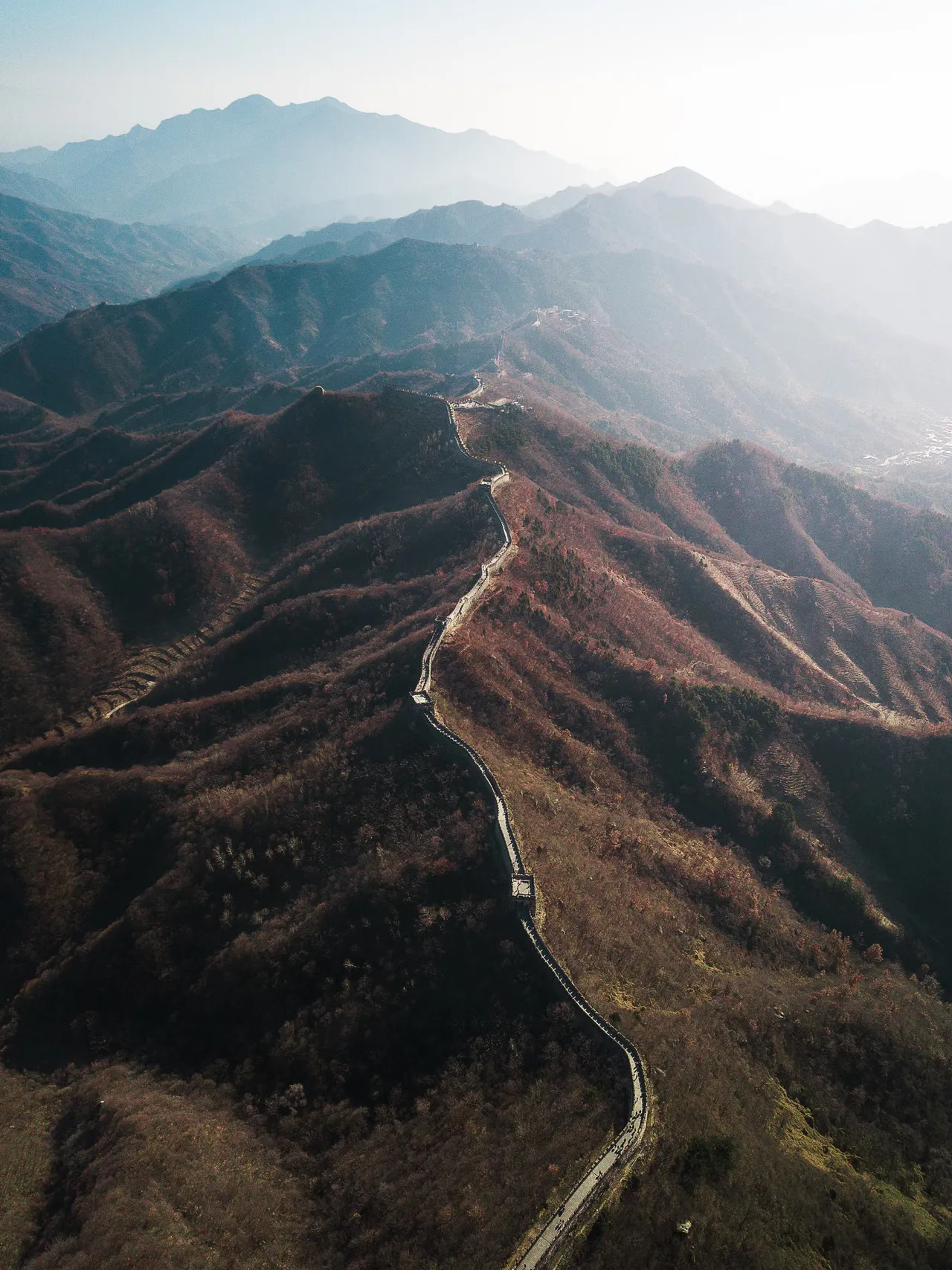
Great Wall
Great Wall · Various sections in northern China. Most-visited sections are in Yanqing and Huairou Districts, Beijing, ~70-100km from city center
Last updated 2026-10-29
By Global Travel Guide Editorial Team
Introduction
It is not one continuous wall but a series of walls, watchtowers, and garrisons raised by different dynasties to hold back nomadic incursions from the north. The surviving showpieces were built between 1368 and 1644 under the Ming from stone, brick, tamped earth, and wood, and UNESCO listed the wall in 1987. Badaling and Mutianyu both charge about 45 yuan, Jinshanling 65 yuan, and Jiankou is free and unofficial; the Mutianyu cable car adds roughly 120 yuan return. Badaling is reached by S2 suburban train from Huangtudian or bus 877 from Deshengmen, while Mutianyu needs bus 916 from Dongzhimen plus a transfer, which is why many people take an organised day tour. Late April to May and September to early October give the clearest weather.
Ticket Price
Badaling: around 45 yuan; Mutianyu: around 45 yuan (cable car extra ~120 yuan round trip); Jinshanling: around 65 yuan; Jiankou: free (unofficial). Prices vary by section — check official site.
Opening Hours
Badaling: 7:30–17:30 (winter 7:30–17:00); Mutianyu: 7:30–17:30 (winter 8:00–17:00); Jinshanling: 6:30–18:00 (winter 7:30–16:30). Check the official site before visiting.
Transportation
Badaling: S2 suburban rail from Huangtudian, or bus 877 from Deshengmen; Mutianyu: bus 916 from Dongzhimen then transfer, or join a tour; Many visitors book organized day tours from Beijing which include transport and guide
Best Season
Late April–May and September–early October for mild weather and clear skies; summer is hot and crowded on weekends; winter is cold but offers dramatic snow scenes and very few people
Pro Tip: Choose Mutianyu for fewer crowds
Local Tips You'd Only Learn After Visiting
The details official guides skip — save time, avoid crowds, and get better photos.
1
Choose Mutianyu for fewer crowds Mutianyu is well restored, has cable-car access and is usually less crowded than Badaling. Book transport and tickets in advance, especially on weekends and holidays.
Member-Only Tips
Upgrade to unlock insider hacks, best photo spots, and crowd timing advice.
Frequently Asked Questions3 questions
The Ming walls were built to defend the northern frontier, with watchtowers for signals and garrisons for troops. Earlier dynasties also built walls, but the standing stone sections are mostly Ming.
Mutianyu has 2.25 km of restored wall and 22 watchtowers with fewer crowds; Jinshanling is wilder and better for a longer hike. Badaling is the easiest but the busiest.
April-May and September-October for mild weather and clear views; winter is quiet but cold, and Chinese public holidays are extremely busy.