Jiuzhaigou Valley
Jiuzhaigou Valley · Zhangzha Town, Jiuzhaigou County, Aba Prefecture, Sichuan, China
Last updated 2026-10-29
By Global Travel Guide Editorial Team
Introduction
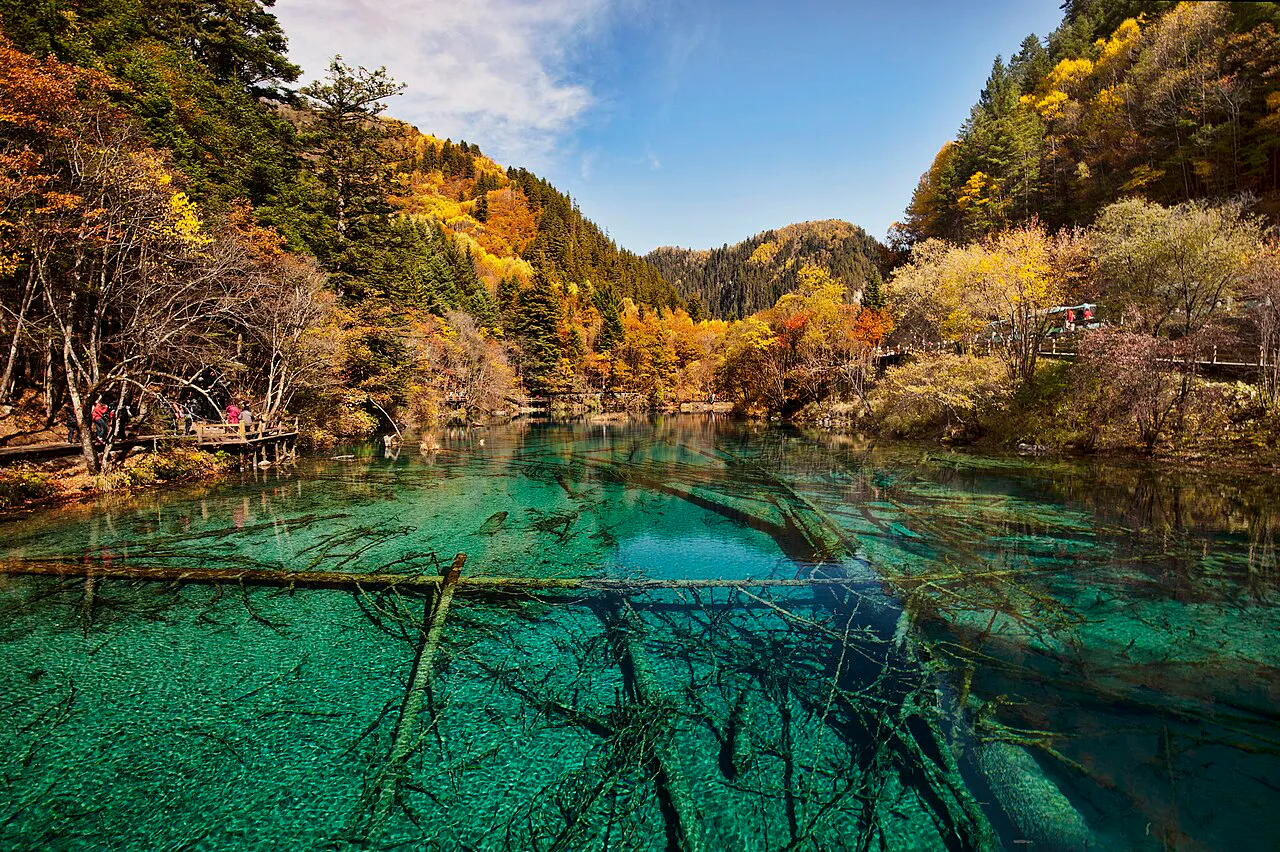
The valley covers about 720 square kilometres of the Min Mountains in northern Sichuan, at 2,000 to 4,500 metres, and was named a UNESCO World Heritage Site in 1992 and a World Biosphere Reserve in 1997. Its turquoise and azure lakes owe their colour to travertine deposits and aquatic mosses that shift with depth, mineral content and viewing angle. The park holds more than 100 lakes, dozens of waterfalls including the 320-metre-wide Nuorilang Waterfall, and several Tibetan and Qiang villages; Jiuzhaigou means Valley of Nine Villages. A magnitude 7.0 earthquake in August 2017 damaged parts of the park, since restored, and daily visitor numbers are capped. Private cars are not allowed, so a shuttle bus links the main sights. Peak-season entry costs CNY 190 plus CNY 90 for the shuttle, with entry from 8:00 to 14:00; book online in advance, particularly for the October colour.
Ticket Price
Peak season (1 Apr-15 Nov 2026): CNY 190 (≈ USD 28) entrance + CNY 90 shuttle; optional CNY 10 insurance. Off-season (16 Nov-31 Mar): CNY 80 + CNY 80. Book online in advance.
Opening Hours
Peak season: entry 8:00-14:00, park closes 18:00. Off-season: entry 8:30-14:00, park closes 18:00.
Transportation
Long-distance buses from Chengdu, or fly to Jiuzhai Huanglong Airport (JZH) and continue by bus or taxi. Private vehicles are not allowed inside the park; use the shuttle.
Best Season
In China, the cool dry season (Nov-Feb) is best for sightseeing; Apr-May is extremely hot and Jun-Sep is rainy. Outdoor viewpoints are best in mild, clear weather.
Pro Tip: Book a date-specific ticket and use the shuttle
Local Tips You'd Only Learn After Visiting
The details official guides skip — save time, avoid crowds, and get better photos.
1
Book a date-specific ticket and use the shuttle Jiuzhaigou uses timed entry and a mandatory shuttle system. Book ahead, arrive early, and plan your stops around the shuttle route rather than walking the entire valley.
Member-Only Tips
Upgrade to unlock insider hacks, best photo spots, and crowd timing advice.
Frequently Asked Questions3 questions
The water is clear and mineral-rich, and the lake beds are lined with calcium carbonate travertine; algae and reflected light add the blues and greens. The park ranges from about 2,000 m to over 4,500 m.
There are three main valleys: Shuzheng, Rize and Zechawa. Shuzheng has the widest lakes, Rize has the most famous waterfalls, and Zechawa has the Five-Color Pool and Long Lake.
Late September to October for autumn colors and clear water; April-May for fewer crowds. Winter is quiet but parts of the park close.