Bahia Palace
Bahia Palace
Last updated 2026-10-30
By Global Travel Guide Editorial Team
Introduction
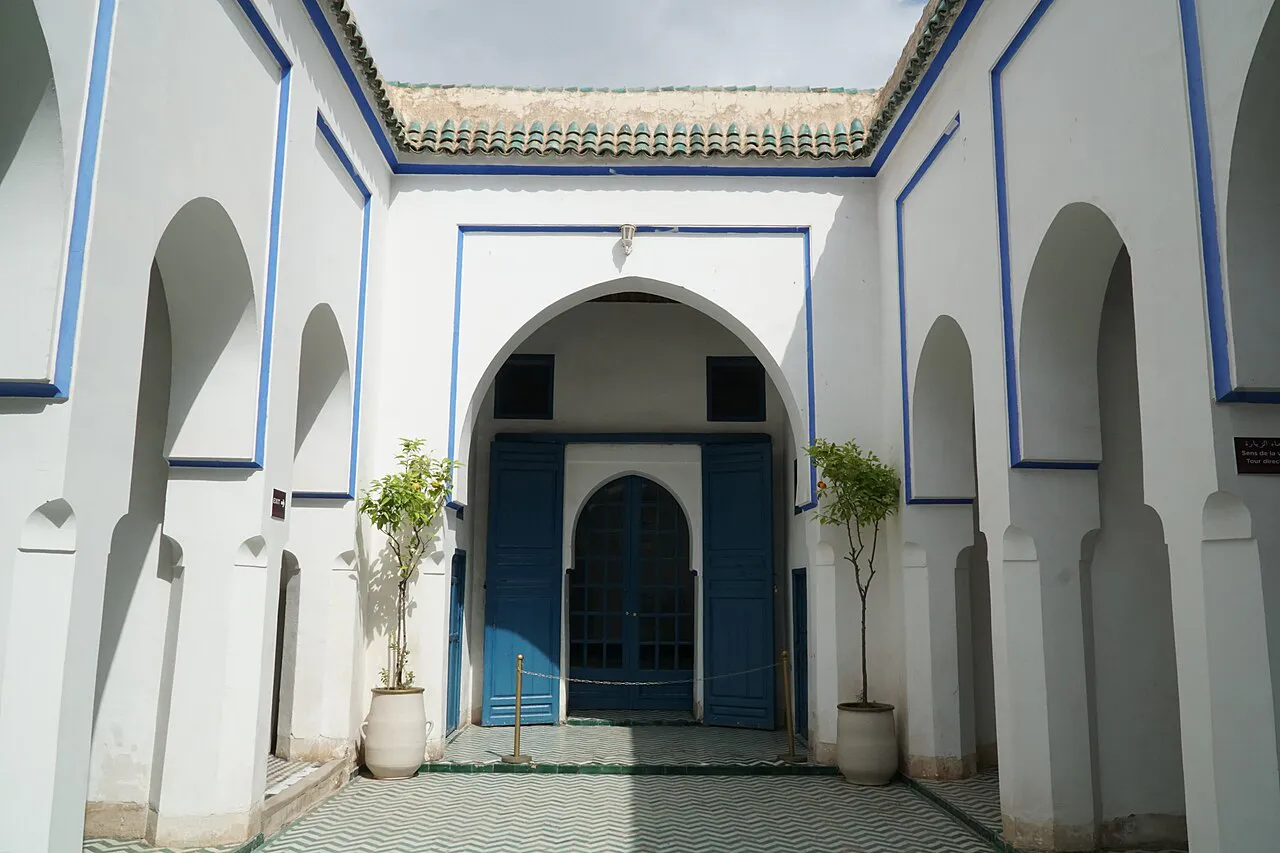
Built in stages between 1867 and 1900, the palace was begun by Si Musa, grand vizier to Sultan Moulay Hassan I, and enlarged by his son Si Ahmed ben Musa, also a grand vizier; Bahia means brilliance in Arabic. The complex covers nearly eight hectares and includes courtyards, gardens, riads, harem quarters and stables. Its decoration draws on Moroccan and Andalusian traditions, with zellij mosaic tilework, carved stucco, painted cedarwood ceilings and mosaic fountains. The Grand Courtyard, paved in marble and ringed by 56 wooden-pillared arcades, is the central feature. After Si Ahmed died in 1900 the palace was looted and later used by French Protectorate authorities, and it is now a listed historic monument. Admission is MAD 100 for adults and MAD 50 for children aged 7 to 13; it is open daily 9:00 to 17:00 with last entry at 16:30, and going early avoids the queues.
Ticket Price
Adult MAD 100 (≈ USD 10); children 7-13 MAD 50, under 7 free. Tickets at the gate; go early to avoid queues.
Opening Hours
Daily 9:00-17:00 (last entry 16:30).
Transportation
About 15 minutes on foot or a short taxi ride from Jemaa el-Fnaa.
Best Season
Mar-May and Sep-Nov for mild weather; Jul-Aug is hot; Ramadan changes hours.
Pro Tip: Go early and hire a guide
Local Tips You'd Only Learn After Visiting
The details official guides skip — save time, avoid crowds, and get better photos.
1
Go early and hire a guide The palace is popular and the rooms are empty of furniture. Visit early, hire a licensed guide for the tilework and history, and carry water.
Member-Only Tips
Upgrade to unlock insider hacks, best photo spots, and crowd timing advice.
Frequently Asked Questions3 questions
Allow 1-1.5 hours for the courtyards, painted ceilings and gardens. It is compact, but midday crowds slow you down.
It was built in the late 19th century for Si Moussa, a grand vizier, and expanded by his son Ba Ahmed. The name "Bahia" means "brilliance".
The painted cedar ceilings, zellige tilework, the harem courtyards and the orange-tree garden. Information panels are limited, so a guide adds context.