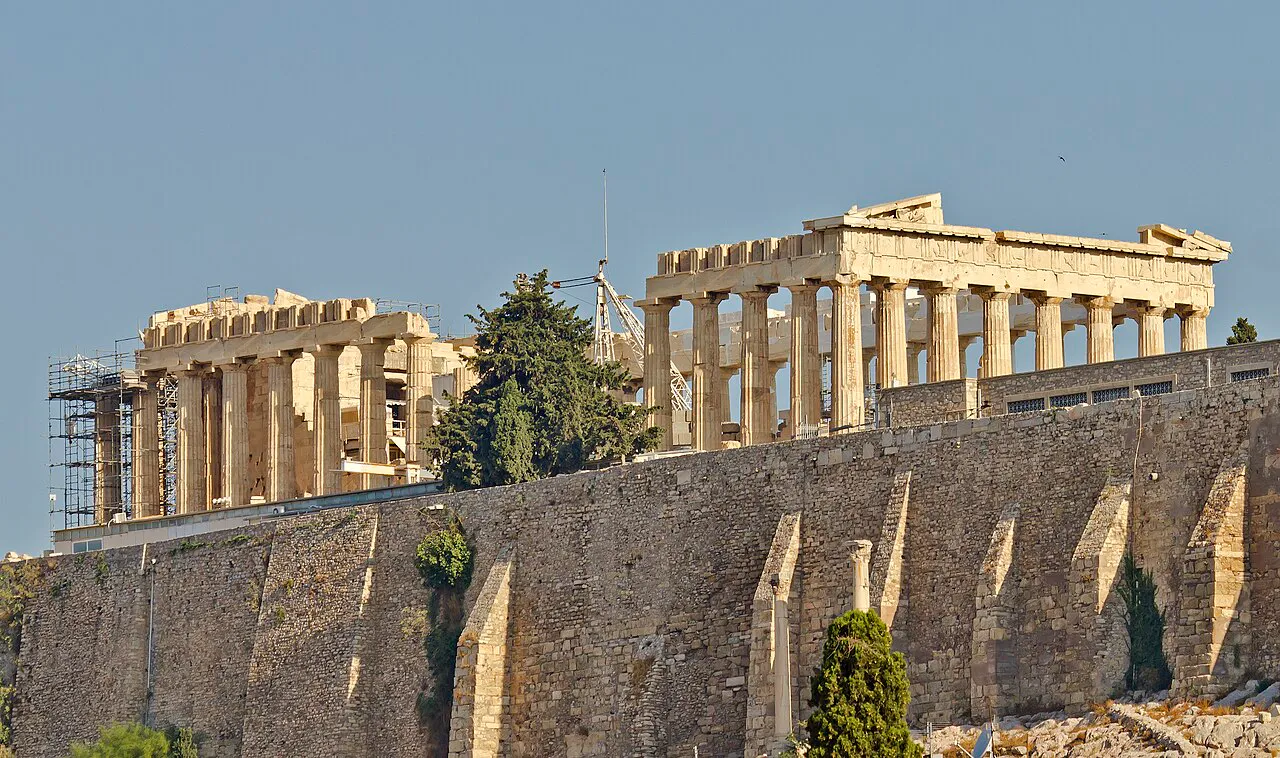
Acropolis of Athens
Acropolis of Athens · Athina 105 58, Greece (Athens, Greece)
Last updated 2026-10-29
By Global Travel Guide Editorial Team
Introduction
The word acropolis comes from the Greek akron (edge) and polis (city); the hill was inhabited by the 4th millennium BCE, though the surviving buildings date largely to the 5th century BCE. The building programme under the statesman Pericles made the site a symbol of Classical Greek civilization. Besides the Parthenon, dedicated to Athena, the plateau holds the Propylaea gateway, the Erechtheion with its Caryatid porch, and the Temple of Athena Nike. The Acropolis Museum at the base of the hill displays many of the original sculptures and finds. A single summer ticket costs about 20 euros, half price from November to March, and a 30-euro combined ticket also covers the Ancient Agora, Roman Agora, Kerameikos and Olympieion; EU citizens under 25 enter free. Hours run 8:00 to 20:00 from April to October and 8:00 to 17:00 in winter; metro line 2 stops at Acropolis Station, five minutes away.
Ticket Price
Single ticket: around €20 (≈ USD 22) adult (summer), €10 (winter half-price Nov-Mar); Combined ticket (5 sites: Acropolis + Ancient Agora + Roman Agora + Kerameikos + Olympieion): around €30; EU citizens under 25 free. Check the official site (culture.gov.gr) before booking.
Opening Hours
Summer (April–Oct): 8:00–20:00 (last entry 19:30); Winter (Nov–Mar): 8:00–17:00; Closed: 1 January, 25 March, 1 May, Easter Sunday, 25 & 26 December. Check the official site before visiting. Check the Hellenic Ministry of Culture website for exact dates.
Transportation
Metro: Acropolis Station (Red Line 2), 5 min walk to the main entrance; Bus: routes 230, A2, A3, A4, 040, 106, 136, 230, 856 stop near the base; Tram: Leoforos Vouliagmenis stop; Walking from Plaka/Monastiraki: 10-15 min uphill walk
Best Season
April–June and September–October for mild temperatures and decent weather; July and August are very hot (35-40°C midday) and extremely crowded; Winter has very few visitors but can be rainy and cold; Early morning is the best time of day year-round
Pro Tip: Enter at opening
Local Tips You'd Only Learn After Visiting
The details official guides skip — save time, avoid crowds, and get better photos.
1
Enter at opening The Acropolis is hot and exposed by mid-morning. Book a timed ticket, enter early, and go to the Parthenon before the tour groups reach the top.
Member-Only Tips
Upgrade to unlock insider hacks, best photo spots, and crowd timing advice.
Frequently Asked Questions4 questions
Yes in summer; book a timed slot online and go at opening or after 17:00 to avoid heat and tour groups. The ticket covers the slopes and the Parthenon.
Wear shoes with grip: the marble is polished and slippery. Bring a hat, water and sun protection; there is little shade on the rock.
Allow 1.5-2 hours for the Acropolis and the slopes, or 3 hours if you add the Ancient Agora and the museum.
Metro to Acropoli station, then a 10-minute walk to the south entrance; the Plaka side is easier for the main gate.