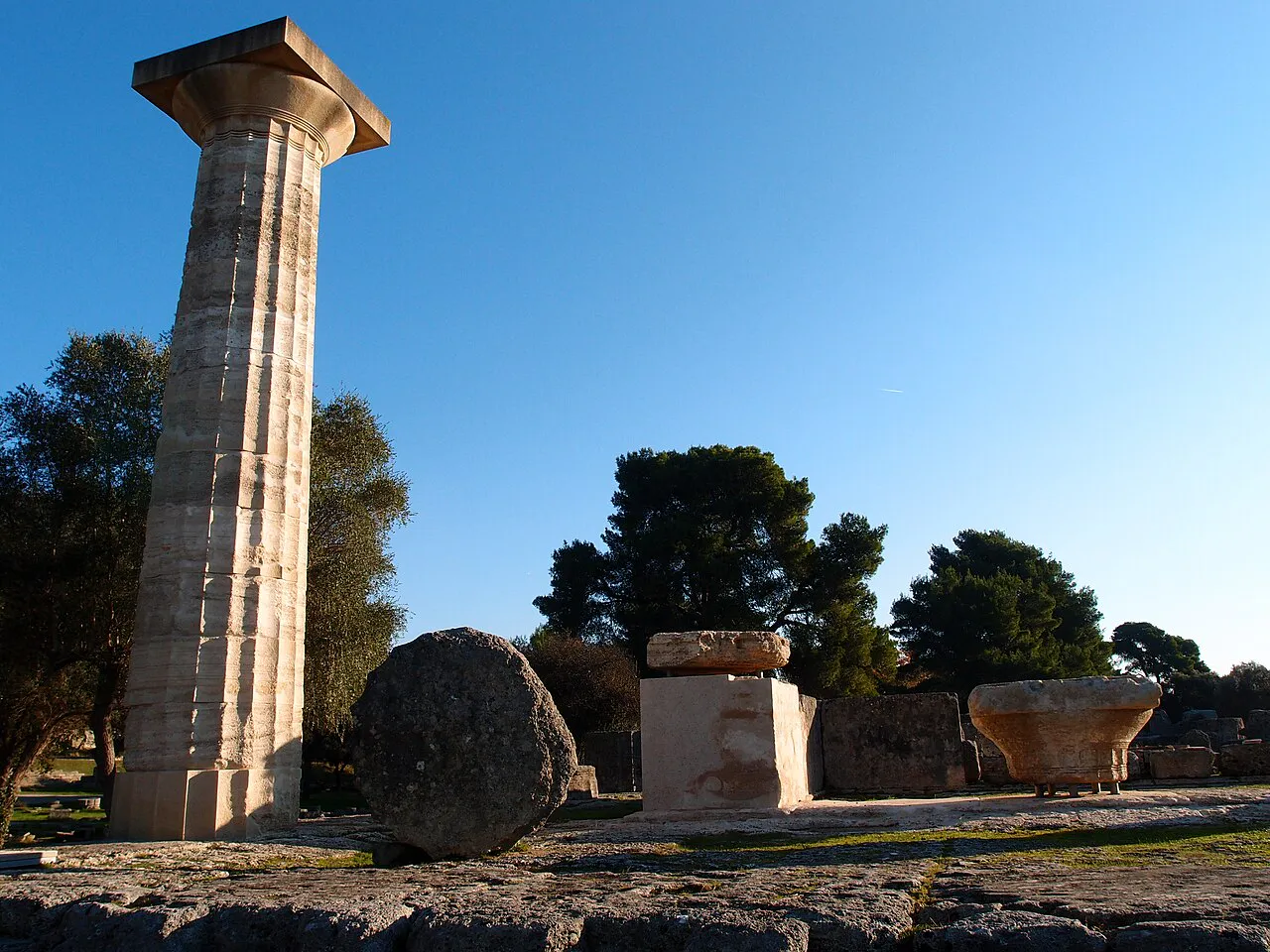
Ancient Olympia
Ancient Olympia
Last updated 2026-10-29
By Global Travel Guide Editorial Team
Introduction
Olympia grew around a sacred grove in the Alfeios valley, and from 776 BC athletes came every four years to compete for olive wreaths rather than cash. You can walk through the vaulted entrance tunnel onto the stadium track, where the stone starting lines remain, and pick out the foundations of the workshop where Phidias is thought to have made the statue of Zeus. The museum holds the surviving pediment carvings and the helmet of Miltiades. Allow three to four hours. Buses from Athens take about three and a half hours, or trains run from Katakolo, with the ruins a short walk from town.
Ticket Price
Apr-Oct EUR 12 (≈ USD 13), Nov-Mar EUR 6; the ticket includes the archaeological museum.
Opening Hours
From 1 April 2026 the archaeological site is open daily 8:00-20:00, with last entry at 19:40. It closes on 1 January, 25 March, 1 May, Easter Sunday, 25 and 26 December.
Transportation
Bus from Athens takes about 3.5 hours; trains also connect Katakolo and Olympia, with the site a short walk from town.
Best Season
In Greece, Apr-Jun and Sep-Oct are warm and pleasant; Jul-Aug is busy and hot. Open-air ruins and sites are best in the cool, dry season; avoid midday heat.
Pro Tip: Start at the museum: The archaeological museum explains the pediments and the workshop of Pheidias. Without it the ruins are hard to read; the combined ticket covers both.
Local Tips You'd Only Learn After Visiting
The details official guides skip — save time, avoid crowds, and get better photos.
1
Start at the museum
The archaeological museum explains the pediments and the workshop of Pheidias. Without it the ruins are hard to read; the combined ticket covers both.
Member-Only Tips
Upgrade to unlock insider hacks, best photo spots, and crowd timing advice.
Frequently Asked Questions3 questions
It was the sanctuary of Zeus and the site of the ancient Olympic Games, held every four years from 776 BC. The stadium and temple ruins are part of the UNESCO site.
The Temple of Zeus, the stadium and starting line, the workshop of Phidias and the museum with the Hermes of Praxiteles. Allow 2-3 hours.
April-June and September-October for mild weather; summer is hot with little shade. Avoid midday in July-August.