Knossos
Knossos
Last updated 2026-10-29
By Global Travel Guide Editorial Team
Introduction
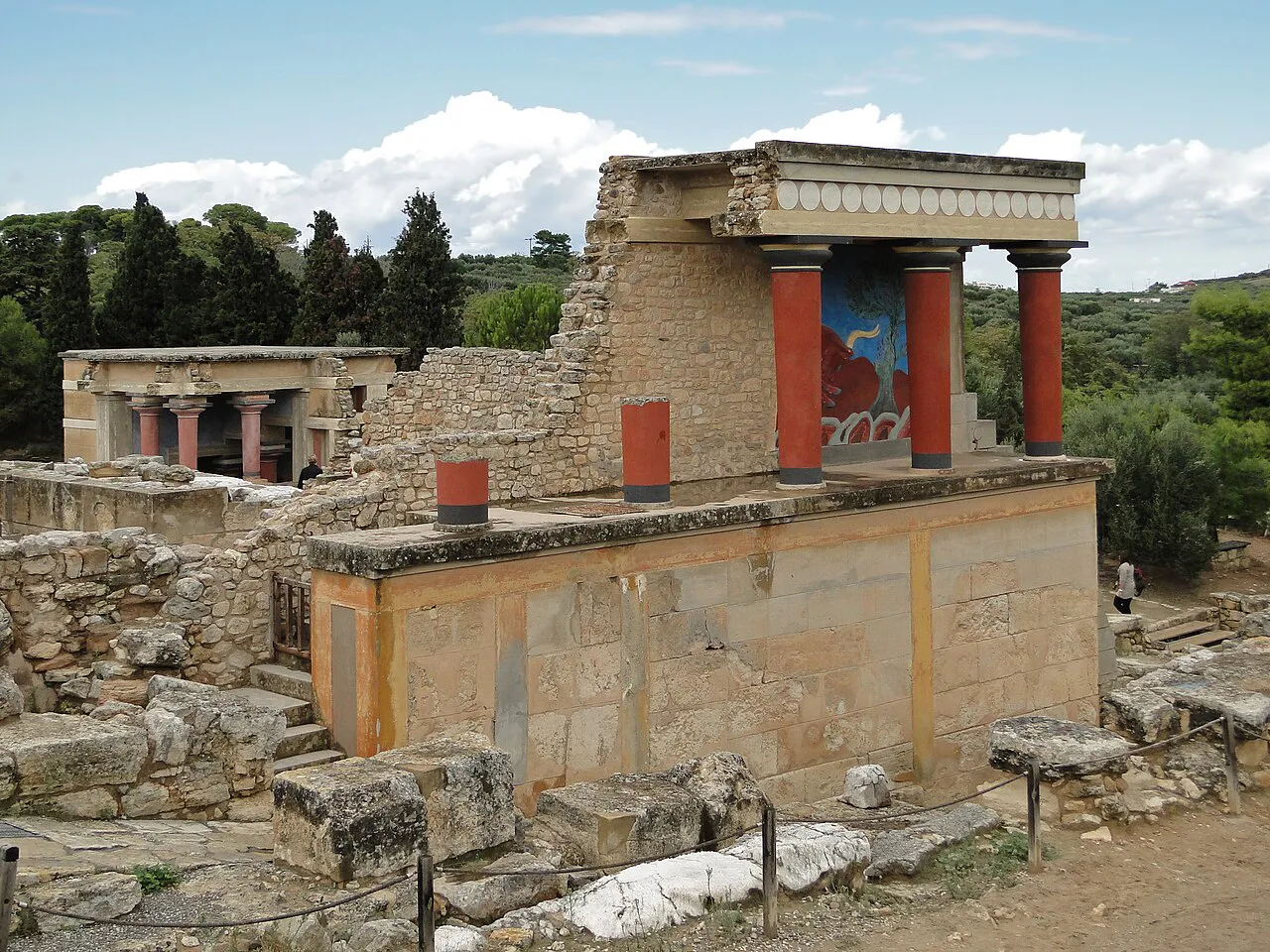
The palace was the political and ceremonial centre of the Minoan civilization, which flourished from about 2700 to 1450 BC. It was built and rebuilt in phases, peaking around 1700-1450 BC before fire and earthquake destroyed it. At its height it had more than 1,300 rooms, including the Throne Room, storerooms with pithoi jars and the Bull Court. Arthur Evans began digging in 1900 and named the civilization after King Minos; his concrete reconstructions, especially the Grand Staircase, remain visible. The site is tied to the legend of the Minotaur and the Labyrinth. A full ticket costs EUR 20, reduced EUR 10, or EUR 30 combined with the Heraklion Archaeological Museum. Hours are 8:00-20:00 from April to October and 8:00-17:00 from November to March. Bus 2 from Heraklion takes about 20 minutes; arrive at opening to avoid heat and tour groups.
Ticket Price
Full ticket EUR 20 (≈ USD 22), reduced EUR 10; combo with the Heraklion Archaeological Museum EUR 30.
Opening Hours
Apr-Oct 8:00-20:00; Nov-Mar 8:00-17:00.
Transportation
Bus 2 from Heraklion takes about 20 minutes to the site.
Best Season
In Greece, the best time to visit Knossos is Apr-Jun or Sep-Oct; Jul-Aug is hot and busy.
Pro Tip: Go early with a guide
Local Tips You'd Only Learn After Visiting
The details official guides skip — save time, avoid crowds, and get better photos.
1
Go early with a guide Knossos is hot and crowded by mid-morning. Enter at opening, hire a licensed guide, and carry water and sun protection.
Member-Only Tips
Upgrade to unlock insider hacks, best photo spots, and crowd timing advice.
Frequently Asked Questions3 questions
It is the largest Bronze Age palace complex on Crete, associated with the Minoan civilisation and the legend of the labyrinth. It was excavated from 1900 by Arthur Evans.
Arthur Evans reconstructed sections in concrete and painted them based on his interpretation, which helped visitors imagine the palace but is controversial among archaeologists.
The throne room, the Grand Staircase, the storage magazines and the frescoes, including the Bull-Leaping Fresco. A licensed guide helps separate original from reconstruction.