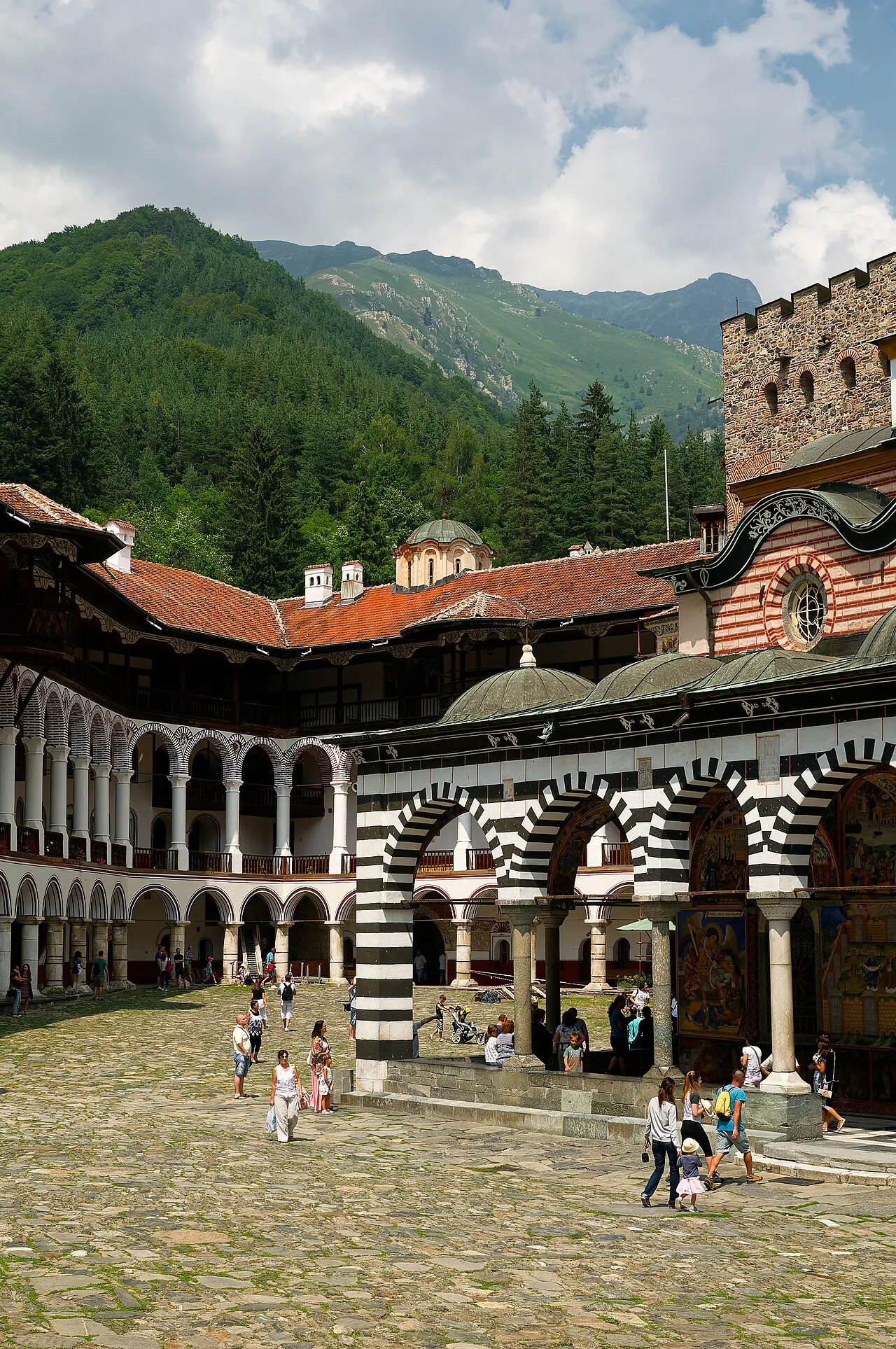
Rila Monastery
Rila Monastery
Last updated 2026-10-30
By Global Travel Guide Editorial Team
Introduction
A hermit, Saint Ivan of Rila, founded the monastery in the 10th century. It has been destroyed and rebuilt several times, most recently after a fire in 1833. The present complex dates mainly from that 19th-century reconstruction and follows the Bulgarian National Revival style. It forms a large irregular quadrangle with four-storey residential wings, 300 rooms, four chapels and the Church of the Nativity of the Virgin Mary at its centre. The church holds frescoes by Zahari Zograf, a carved wooden iconostasis and a gold-plated icon of the Virgin Mary said to work miracles. Around 40 monks still live here, and the museum displays religious art including Rafail's Cross. Entry is free with donations welcome, while the museum and treasury charge a small fee. Buses from Sofia take about 2.5 hours via Rila town, and a car takes about 2 hours; dress modestly, as some areas close during services.
Ticket Price
Free entry; donations welcome. The museum and treasury charge a small separate fee.
Opening Hours
Generally 9:00 AM - 5:00/6:00 PM, but varies by religion and day. Closed during prayer times at mosques/temples. Sunday Mass times at churches. Always check specific religious schedules before visiting.
Transportation
Bus from Sofia to Rila takes about 2.5 hours, then a local bus or taxi; tours and cars take about 2 hours.
Best Season
In Bulgaria, plan Rila Monastery for May-Jun or Sep-Oct; winters are cold.
Pro Tip: Dress modestly
Local Tips You'd Only Learn After Visiting
The details official guides skip — save time, avoid crowds, and get better photos.
1
Dress modestly The monastery is an active religious site. Cover shoulders and knees, keep voices low, and do not photograph monks without permission.
Member-Only Tips
Upgrade to unlock insider hacks, best photo spots, and crowd timing advice.
Frequently Asked Questions3 questions
It was founded in the 10th century by St Ivan of Rila, a hermit, and became the spiritual centre of Bulgaria. The present buildings date mainly from the 19th-century reconstruction.
The courtyard frescoes, the main church, the museum with the Rafail cross and the fortress-like walls. The mountain setting is part of the visit.
It is a wooden cross carved with miniature scenes and figures by the monk Rafail, said to have taken 12 years. It is displayed in the monastery museum.