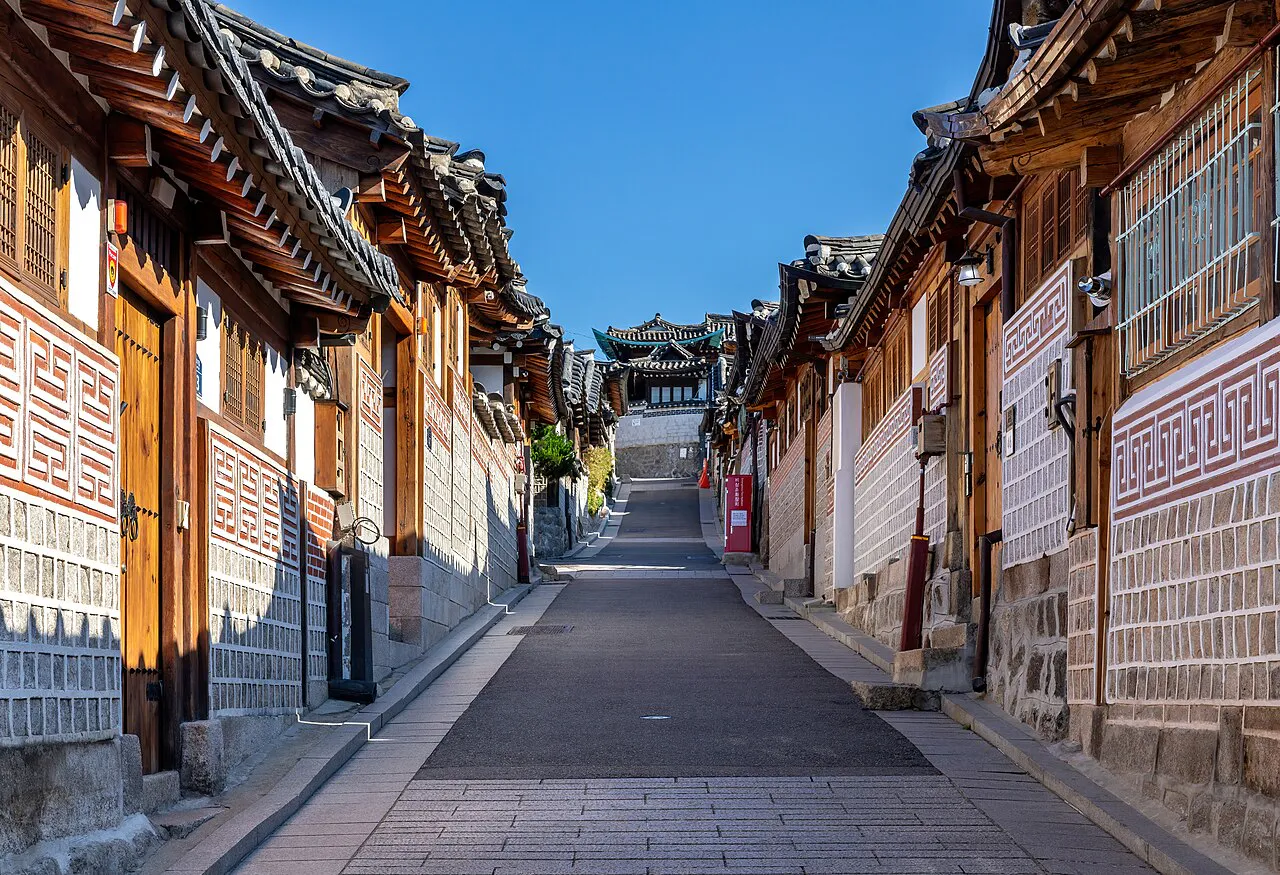
Bukchon Hanok Village
Bukchon Hanok Village
Last updated 2026-10-30
By Global Travel Guide Editorial Team
Introduction
The neighborhood grew as the residential quarter for Joseon officials and sits between Gyeongbokgung and Changdeokgung palaces, in what was the royal part of the city. Many of the hanok were built in the early 20th century, though some date to the late 19th century. Unlike folk villages staged for tourists, Bukchon is a working residential area; a number of houses have been converted into guesthouses, tea houses, craft workshops and small museums. The lanes climb across hillsides, with views over tiled roofs toward the palace grounds and the modern city beyond. Walking is the only practical way around, the alleys are narrow and several compounds are private, so keep voices low and do not enter closed gates. Anguk Station on line 3 is a 10-minute walk, and early morning is quietest.
Ticket Price
Free to enter and walk around. Individual attractions (museums, churches, towers, palaces) charge separate entry fees: €5-€15 each. Combined city/museum passes available for €20-€35.
Opening Hours
Old town is open 24/7 — you can wander any time. Shops: generally 10:00 AM - 7:00 PM (longer in summer, shorter on Sundays). Museums and attractions: 9:00/10:00 AM - 5:00/6:00 PM. Many places closed Sundays/Mondays.
Transportation
Best explored on foot — it's a compact area. Public transit: metro/train to nearest station (5-10 min walk to center). Parking outside old town walls (cars usually not allowed inside the historic center).
Best Season
In South Korea, the best time to visit Bukchon Hanok Village is late Mar-early Apr or Oct-Nov; May-Jun and Sep-Oct are also mild.
Pro Tip: Visit quietly and early
Local Tips You'd Only Learn After Visiting
The details official guides skip — save time, avoid crowds, and get better photos.
1
Visit quietly and early Bukchon is a residential neighbourhood, not a theme park. Go before 10am, keep your voice low, and do not enter private courtyards or block doorways for photos.
Member-Only Tips
Upgrade to unlock insider hacks, best photo spots, and crowd timing advice.
Frequently Asked Questions4 questions
The stepped lane at Bukchon-ro 11-gil, looking down over the tiled roofs, is the classic shot. Go before 9:00 to avoid tour groups and keep quiet for residents.
Visitors are asked to keep to about 10:00-17:00, and some alleys close in the evening for residents. Quiet hours are enforced by signs and volunteers.
Metro line 3 to Anguk station, exit 2, then a 5-minute walk. The village is also a short walk from Gyeongbokgung Palace.
Allow 1-2 hours to walk the main lanes and nearby Samcheong-dong. Go early in the morning for fewer people and better photos.