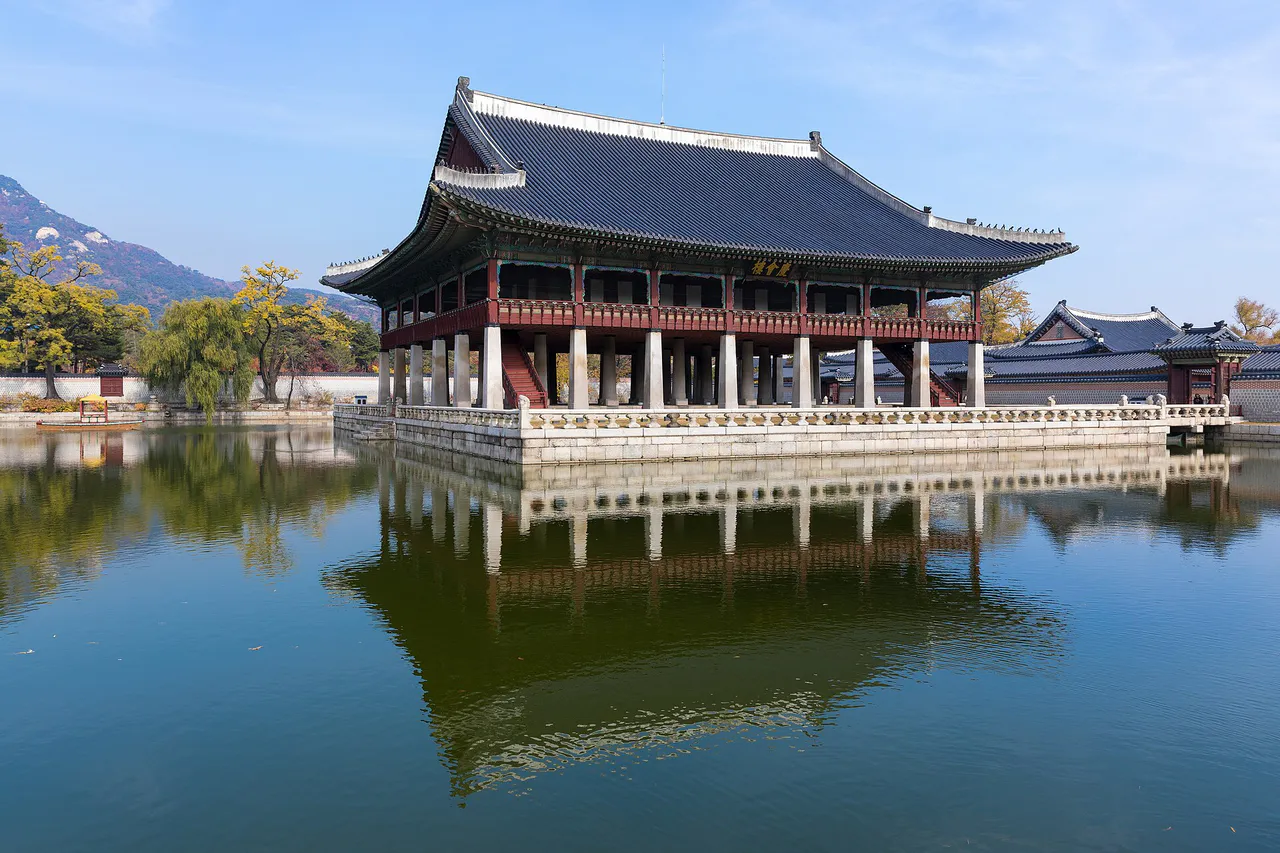
Gyeongbokgung Palace
Gyeongbokgung Palace
Last updated 2026-10-30
By Global Travel Guide Editorial Team
Introduction
Construction began in 1395, three years after the Joseon dynasty was founded, and the palace served as the main royal residence for more than 200 years. It was destroyed twice, during the Japanese invasions of the 1590s and again under Japanese colonial rule in the early 20th century, and restoration has continued since 1990. The complex holds the Geunjeongjeon throne hall, the Gyeonghoeru banquet pavilion, a National Treasure set over a rectangular pond, the royal living quarters, and the National Palace Museum and National Folk Museum. The changing of the guard takes place in front of Gwanghwamun, the main gate at the north end of Seoul's central axis. Adult tickets cost KRW 3,000 and entry is free if you wear hanbok; the palace closes on Tuesdays and last entry is one hour before closing. Take metro line 3 to Gyeongbokgung Station, exit 5, a five-minute walk.
Ticket Price
Adult KRW 3,000 (≈ USD 2.3); youth 7-18 KRW 1,500; under 6 and over 65 free. Free entry if you wear hanbok; closed Tuesdays.
Opening Hours
Mar-May and Sep-Oct 9:00-18:00; Jun-Aug 9:00-18:30; Nov-Feb 9:00-17:00; last entry one hour before closing; closed Tuesdays.
Transportation
Metro line 3 to Gyeongbokgung Station, exit 5 (5-minute walk); or line 5 to Gwanghwamun Station, exit 2 (8-minute walk).
Best Season
In South Korea, the best time to visit Gyeongbokgung Palace is late Mar-early Apr or Oct-Nov; May-Jun and Sep-Oct are also mild.
Pro Tip: See the guard-changing ceremony
Local Tips You'd Only Learn After Visiting
The details official guides skip — save time, avoid crowds, and get better photos.
1
See the guard-changing ceremony Check the ceremony time before you go and arrive early for a spot near the main gate. The palace is normally closed on Tuesdays.
Member-Only Tips
Upgrade to unlock insider hacks, best photo spots, and crowd timing advice.
Frequently Asked Questions4 questions
Yes, it is closed on Tuesdays. If a public holiday falls on a Tuesday, it opens that day and closes the next day instead.
Yes. Anyone wearing hanbok enters free, and the palace is also free on the last Wednesday of each month (Culture Day).
March-May and September-October 9:00-18:00; June-August 9:00-18:30; November-February 9:00-17:00. Last entry is one hour before closing.
The ceremony is usually at 10:00 and 14:00 at Gwanghwamun, except Tuesdays. It is free to watch from the gate plaza.